
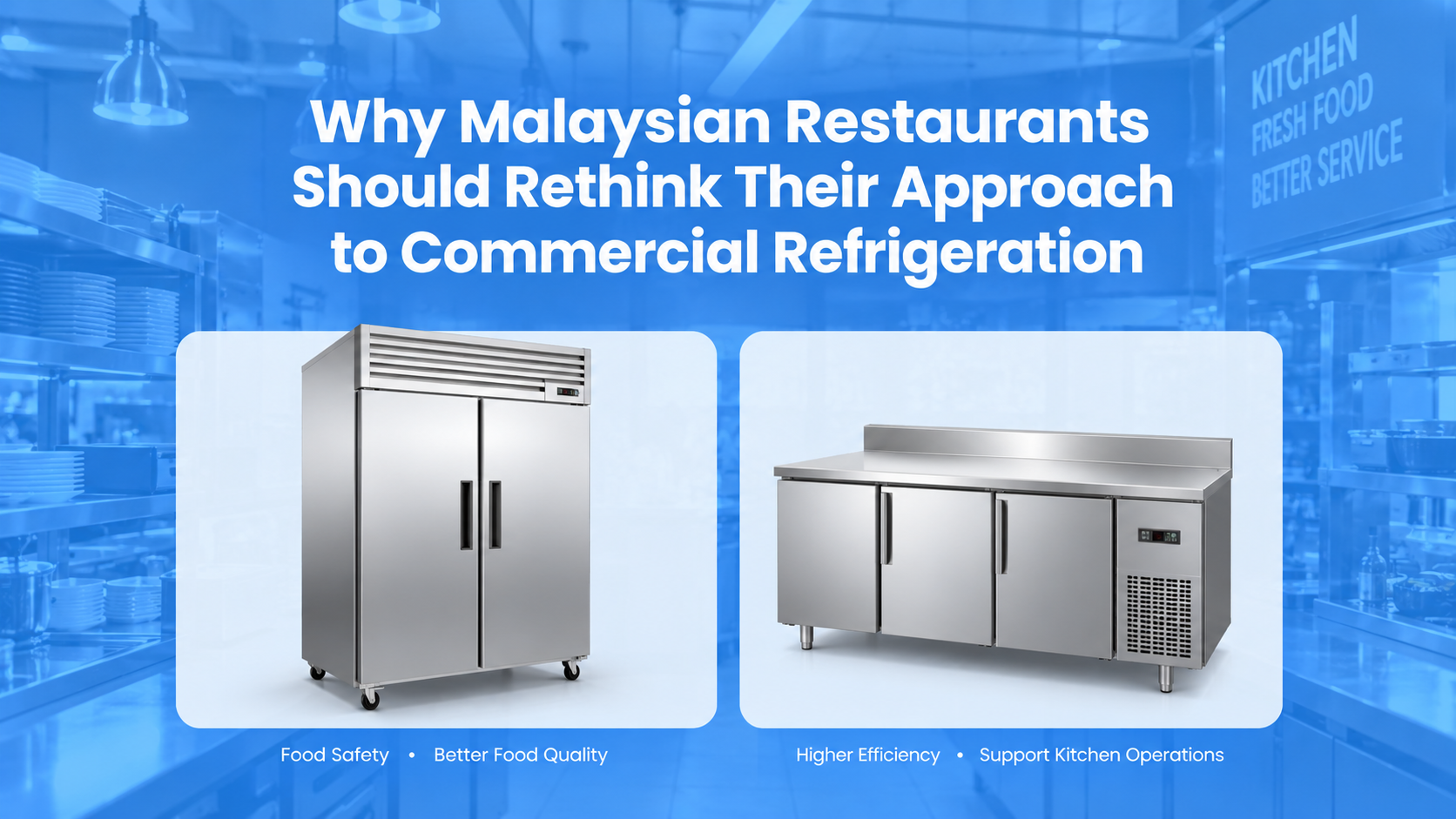
Malaysian restaurants operate in one of the world’s most dynamic and competitive food environments. While the focus often lands on menu innovation and customer experience, there’s a vital area that deserves just as much attention: commercial refrigeration. In my view, it’s time for local restaurants, cafés, and food chains to fundamentally rethink how they approach refrigeration, both as a daily operational tool and a long-term investment.
The Hidden Role of Refrigeration in Restaurant Success
Refrigeration is an essential part of every restaurant, but it is often something that gets overlooked once the equipment is installed. Choosing the right commercial refrigerator or freezer can make a real difference to food safety, kitchen efficiency, product quality, and overall operating costs.
Consider the variety of chilled and frozen products handled daily: fresh seafood, premium meats, delicate desserts, ready-to-eat drinks, and more. The ability to maintain precise temperatures and proper storage conditions isn’t just about compliance. It’s about delivering consistent quality and minimising costly spoilage.
Yet, many Malaysian restaurants rely on aging, mismatched, or generic refrigeration units that may not suit their evolving business needs. This often leads to avoidable issues like uneven cooling, excessive energy consumption, or unsightly display equipment that undermines premium branding.
Common Pitfalls in Traditional Restaurant Refrigeration
Based on conversations with restaurant operators and industry experts, several recurring issues stand out:
- Underestimating Capacity Needs: Choosing a refrigerator or freezer that’s too small can create bottlenecks, while oversized units waste energy and valuable kitchen space.
- Mixing Domestic and Commercial Units: Some restaurants use household refrigerators in commercial kitchens, risking inconsistent temperatures and frequent breakdowns under heavy use.
- Poor Layout Planning: Placing display chillers, island freezers, or chest freezers without considering workflow can slow down staff and disrupt service, especially during peak hours.
- Neglecting Maintenance: Without a proactive service routine, even high-quality commercial refrigerators eventually suffer from performance drops, leading to product loss or emergency repairs.
- Outdated Display Strategy: Refrigeration equipment that fails to present food and beverages attractively can reduce upsell opportunities and diminish the customer experience.
Each of these pitfalls highlights why simply buying a “Commercial Refrigerator Malaysia” isn’t enough—what matters is how you select, integrate, and maintain these systems for your unique operation.
What Rethinking Refrigeration Really Means
“Rethinking” commercial refrigeration isn’t about spending more, it’s about being strategic. Here’s what a smarter approach looks like for Malaysian restaurants:
- Tailored Equipment Selection: Consider your menu, product mix, and peak output before selecting equipment. For example, a busy café may benefit from compact glass-door chillers for drinks, while a central kitchen might require large stainless steel freezers or multideck showcase chillers for bulk storage and easy access.
- Optimised Workflow: Place refrigerators and freezers where they support, not hinder, your team’s workflow. Upright units can save space, while island freezers or service counters can double as display and storage, especially in open kitchens or self-service concepts.
- Energy Efficiency: Modern commercial freezers and chillers offer advanced insulation, digital temperature controls, and eco-friendly refrigerants. Choosing newer models can reduce utility bills and support sustainability goals.
- Focus on Food Safety: Consistent cooling prevents bacterial growth and spoilage. Investing in units with reliable temperature monitoring and alarms helps kitchens meet food safety standards without added stress.
- Upgrading Display & Merchandising: For restaurants with grab-and-go or dessert displays, high-visibility chillers and showcase equipment can boost perceived food quality and increase impulse sales.
- Comprehensive Maintenance: Partnering with a specialist supplier for routine checks, parts, and emergency service ensures smooth, uninterrupted operation, critical for high-volume kitchens.
These strategies not only improve daily operations but also extend the lifespan of refrigeration assets, supporting long-term growth.
Choosing the Right Commercial Refrigeration Partner
No two restaurant businesses are the same. That’s why working with an expert supplier who understands the Malaysian F&B landscape is crucial. The right partner will help you:
- Assess your operational needs and recommend suitable equipment, whether it’s a multideck showcase chiller for beverage display or a heavy-duty commercial freezer for bulk storage.
- Customise solutions for unique kitchen layouts, product types, or branding requirements.
- Support after-sales needs with access to refrigeration parts, glass doors, digital controllers, and professional servicing.
For example, WFF Refrigeration Sales & Services Sdn Bhd is known for its decades of experience, wide product selection, and tailored solutions for Malaysian restaurants, cafés, and commercial kitchens. Their expertise covers not just equipment supply but also layout planning, installation, and ongoing support, key factors in avoiding the pitfalls discussed earlier.
If you need more guidance on selecting the best chillers or freezers for cafés, you may find this guide on choosing commercial refrigerators for cafés helpful.
Practical Steps for a Smarter Refrigeration Strategy
To get started on a smarter refrigeration approach, restaurant owners and managers can:
- Audit your current equipment take notes on age, performance, energy usage, and space allocation.
- Identify key operational pain points: is it storage capacity, access speed, display effectiveness, or maintenance hassles?
- Consult with a commercial refrigeration specialist to explore equipment options such as glass-door display chillers, chest freezers, island freezers, and stainless steel upright models.
- Plan for future expansion or menu changes, choose flexible equipment that can adapt as your business grows.
- Invest in a regular maintenance routine, including cleaning, part replacement, and temperature calibration.
Remember, adopting a proactive stance towards refrigeration is not just about preventing breakdowns—it’s about enabling smoother service, higher food quality, and a better customer experience.
For further insights on optimizing cold storage, you may want to read about island freezers in Malaysian F&B businesses.
Conclusion: Embrace Refrigeration as a Business Asset
In conclusion, commercial refrigeration should be viewed as a strategic asset rather than just a background necessity. Malaysian restaurants that rethink their approach, by choosing the right equipment, optimizing layouts, and partnering with reliable suppliers that can stand to gain in quality, efficiency, and profitability.
In my opinion, now is the perfect time for local F&B businesses to move beyond outdated routines. Evaluate your current refrigeration, seek expert advice, and invest in solutions tailored to your unique operation. A smarter strategy for commercial refrigeration is a foundation for long-term restaurant success in Malaysia’s vibrant food scene.
Frequently Asked Questions
Why is commercial refrigeration important for Malaysian restaurants?
Commercial refrigeration is essential for maintaining food safety, prolonging ingredient freshness, minimizing spoilage, and ensuring consistent food quality. It also supports efficient kitchen workflows and enhances the visual appeal of displayed products, which is vital in Malaysia’s hot climate and competitive F&B scene.
What should restaurants consider when choosing a commercial refrigerator in Malaysia?
Restaurants should consider storage capacity, energy efficiency, temperature control, equipment durability, layout fit, and the ability to display products attractively. Consulting with a specialist helps select the right type—such as upright chillers, chest freezers, or island freezers—for your menu and kitchen needs.
How can restaurants maximize the lifespan of their refrigeration equipment?
Regular maintenance—including cleaning, timely replacement of worn parts, and temperature calibration—is key. Partnering with a reliable supplier for scheduled servicing and access to spare parts can prevent breakdowns and extend equipment life.
Are there benefits to upgrading to modern commercial freezers or chillers?
Yes. Modern units often offer better energy efficiency, improved temperature control, eco-friendly refrigerants, and enhanced food safety features. Upgrading can lower utility bills, reduce maintenance costs, and improve both staff productivity and customer perception.
Can I use a domestic refrigerator in my restaurant kitchen?
It is not recommended. Domestic refrigerators are not designed for the heavy, frequent use of a commercial kitchen and may fail to maintain safe temperatures, leading to increased food safety risks and more frequent breakdowns.
Transform Your Restaurant with Expert Refrigeration Solutions
Ready to rethink your approach to commercial refrigeration? WFF Refrigeration Sales & Services Sdn Bhd offers a complete range of commercial display chillers, freezers, multideck showcase chillers, and stainless steel refrigeration solutions, all tailored to the unique needs of Malaysian restaurants, cafés, and food chains. Benefit from decades of technical expertise, customized layouts, and comprehensive maintenance support to keep your kitchen running smoothly and products always fresh. Contact our team today for a free consultation and discover how the right refrigeration strategy can elevate your business.
Disclaimer
We hope you found this article informative. The content provided is for general informational purposes only and does not constitute professional advice or necessarily reflect the full scope of services offered by Wen Ho Industries Sdn. Bhd.
Readers are encouraged to consult with a qualified industry professional or contact our team for solutions tailored to their specific project needs. While we strive to ensure accuracy and completeness in our blog posts, we cannot guarantee they are entirely error-free. Wen Ho Industries Sdn. Bhd. assumes no responsibility for any errors or omissions.